Reimagining Clinical Trials Through Community Care and AI
MIMI FENTON: COVID taught us that clinical trials could be done differently. They don't have to be done in homogeneous populations in large academic medical centers. And there was this real hunger and drive for innovating where clinical trials would be.
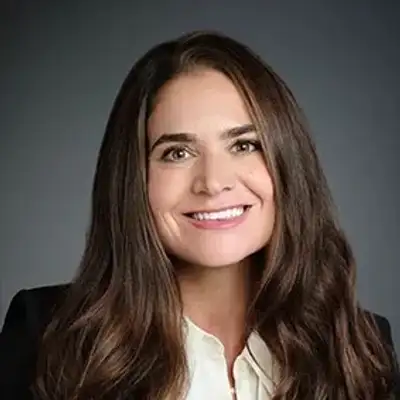
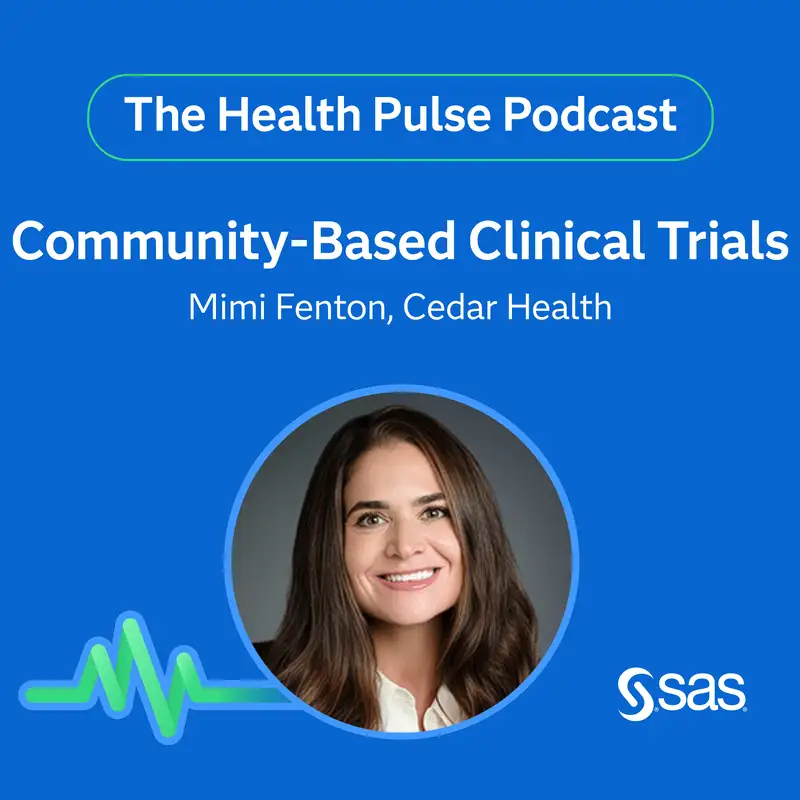
ALEX MAIERSPERGER: Today we talk to Dr. Mimi Fenton, CEO of Cedar Research, who is bringing clinical trials into the community and using AI to improve outcomes. Because of their efforts, the future may look far brighter than the past.
[MUSIC PLAYING]
Mimi, this question may work better as a rule out than a rule in as, what part of the pharmaceutical world have you not touched? We'll talk about your pre-Cedar CEO life. What brought you to this point?
MIMI FENTON: Alex, I'm so honored to have had the opportunity to sit in lots of different seats and really see the pharmaceutical industry as a whole. My first chapter was in academia. I spent a lot of time in school, which culminated in a PhD in epidemiology. And then I spent a couple of years in academia, some kind of a semi-postdoc, just long enough to realize that I was not interested in an academic career and I didn't want to go down the professor route. And so I made my move into industry.
Making a move into industry is really, really difficult. It's hard for folks to do from academia. And so I was very fortunate to get a wonderful opportunity at a consulting company in DC, actually, that worked with lots of different pharmaceutical companies. And I spent a little bit of time there in real-world evidence.
I was fortunate to graduate with an epidemiology degree at a time when real-world evidence was becoming all the rage. And so there were opportunities for epi within industry that were outside of safety and pharmacovigilance and really thinking about how can we leverage big data to enable drug development when it comes to access and speed and inclusion.
After being in the consulting group for a while, I actually had the opportunity to move over into pharma with one of my customers, in fact, from consulting. And I went over to Sanofi and helped to build out the real-world evidence group there. That was a wonderful opportunity because real-world evidence, at the time, was created as a lateral function, meaning we worked across the different verticals within Sanofi. So I had the opportunity to work with R&D, with commercial, with med affairs, with publications, with all of the different groups and really get a sense of what does drug development look like from inception all the way through to commercialization, with this lens of big data. How can we leverage big data to accelerate?
From Sanofi, I went over into the CRO world and I spent some time at Syneos, initially in real-world evidence, doing some similar work, and then moved into product development-- drug development, digital therapeutics, digital medicine. This was during COVID when digital health was really, really important-- decentralized trials.
And I had the opportunity at Syneos to take on lots of different roles. And that's where I learned about clinical trials and the operations of clinical trials. And that's where that link between the data and the operations really started to formulate in my mind.
If you remember at that time, around COVID, a lot of these retail pharmacies were thinking about how do we get into clinical development. There was this appetite for research to be done in the home. COVID taught us that clinical trials could be done differently. They don't have to be done in homogeneous populations in large academic medical centers. And there was this real hunger and drive for innovating where clinical trials would be.
And I was very fortunate to go over to Walmart to help to build out those health care research capabilities. It was at the time that Walmart was creating clinics so that patients could access medications and innovative medications at the same time.
The chief medical officer there, I'll never forget-- his vision was-- he and I were both in Boston at the time-- and he said, Mimi, my vision is that all shoppers at Walmart have access to the same type of health care that we have access to at Mass Gen and clinical research is a critical part of that. And so I had a wonderful time at Walmart helping to build that out.
Walmart decided to go a different direction and that-- the clinics closed down. And that's when this opportunity came along to lead Cedar Health.
So in terms of what I haven't touched, the only other area I would say that I'm really lacking experience is on the payer side. I don't really understand the payer side too well. That goes over my head a little bit. But when it comes to drug development, I've had the opportunity to see lots of different perspectives.
ALEX MAIERSPERGER: So many meaningful stops along the way, and there's probably still something left on the bingo card there. And I'm sure there's great payer friends that can get you up to speed real quick.
The patient recruitment-- we'll talk about participation in clinical trials is something that you talked about experience along the way. Patient recruitment and diversity remain difficult for many studies. Why has this been such a hard problem to solve and what needs to change for meaningful progress?
MIMI FENTON: Yeah. And I think when we talk about patient recruitment and the importance of patient recruitment, it's really about ensuring that clinical trial populations reflect the underlying epidemiology of the disease so that we can bring clinical trials to patients who bear the burden of disease, patients who are suffering from the affliction but don't have access necessarily to the innovative medicines or even to the commercial medicines, which is really the situation at Cedar.
I think we can distill the problem of patient recruitment down to three broad concepts. The first one is access. Historically, it's been very difficult for patients in community in the US-- and I'll focus on the US for now because that's really where the bulk of my recent experience has been-- it's been difficult for patients to be able to access clinical trials. Historically, the clinical trials have been in the smile of America. They've been on the coast with-- in some additional major cities.
But patients, when you look at the epidemiology, when you look at the real-world data, and you look at the actual distribution of the disease, the disease is occurring outside of where the clinical trial access is. And so access is a really critical piece. We've got to solve that ability for patients to be able to get to a clinical trial site that is able to provide high quality, innovative treatment with a focus on patient experience and patient safety.
The next issue is education. So just because you have access to a clinical trial, it does not mean that you would be interested in participating in a clinical trial. And particularly when it comes hard-to-reach patient populations-- and these are patient populations that overindex on many of the diseases that we are currently investigating-- patients have various conceptions, often very rightly so, about the medical world and mistrust for the health care system and concerns around the idea of participating in clinical trials. And that really requires a systemic focus on clinical trial education to communities to build trust from not only sites but also from the industry. And that's something that we're really focused on.
At Cedar, we do a lot of community engagement. We only bring our pharmaceutical sponsors to the table in the community engagement if they commit to us that this is a long-term commitment for them. We are not interested in bringing pharmaceutical companies to the table that want to come in and recruit and move out. We're working, at Cedar, with populations that we've spent years and years building trust-- Native American patients, African American patients, Hispanic patients. And we've made our commitment to them to fully support their holistic patient journey through our relationships with their physicians and through our facilities. And we ask the same of our sponsors as well.
And then I would say that the last piece is really about support. You can provide access and you can provide education, but you have to understand how brave of a choice it is for a patient to decide to participate in a clinical trial. I personally have had family members participate in clinical trials and being on that side is really eye-opening. And it's very much changed my approach to how I think about these things.
It's not enough to say this is a clinical trial and this is why you should participate. We need to make sure that we are holistically supporting the patient, really embracing that very brave journey that they're going on. Just picking up the phone to answer our call or to call us and say, I'm interested in a clinical trial is a very, very brave thing to do.
And so the site and the community and the industry really needs to focus on what are the things that need to happen for patients when it comes to support to get into the trial, through the trial, but also after the trial. What happens, for example, when you bring a patient into a clinical trial for an obesity medication and they lose one third of their body weight and their life is transformed and the clinical trial then finishes and they are underserved, don't have health insurance, and don't have access to continuing medication? So these are all the things that we really need to think through as an industry in order for us to activate that 95% of the patient population that currently are not participating in clinical trials.
ALEX MAIERSPERGER: Wow, that's obviously a huge number. And I love how you focused on the people and you focused on the relationships, both with the people in the community setting and with the pharma companies that you support. I think there's a mindset shift of let's get this trial done versus let's get this disease taken care of and let's solve the problems for the long-term.
Your work at Cedar Research centers on expanding access to trials in the community settings. What does that actually look like in practice? And how does bringing that research closer to where patient lives change what's possible?
MIMI FENTON: Yeah, so we have such an interesting model at Cedar. And this is why I was excited to join the organization as the CEO just about 18 months ago.
We know that clinical trials need to be done in the community. That's clear.
The issue with doing clinical trials in the community is in engaging the community physicians. Community physicians are very, very busy. They can be seeing 30, 40, 50, maybe even more patients a day. A lot of the time they are limited in space, they're limited in resources.
And so a traditional model of trying to enable community researchers, let's go into a community clinic and let's enable that community doc to do the research. I think in doing that, we really underestimate the burden that we're putting on the physician, that these physicians don't have the time to do that. They may not have the space to have an entire room filled with kits and filled with files up and down.
They probably don't have the resources to get a fancy CTMS system. And they probably don't have the space figure out where their paper is going to go. They don't have the money to hire a CRC. They don't have the appetite to be in the red and be at a loss for a little while. And they don't necessarily have the experience or the time to be able to do the training. Just, for example, we have a study that is in maintenance and our PI's just got a retraining that is 10 hours. So that's 10 hours of our PIs day for a study that isn't enrolling patients, that's been going on for several for several years. So, really, clinical trials are very, very burdensome to community doctors.
The Cedar model is very interesting. And the important point, though, to note, is that we know that recruitment and retention-- and we should focus on retention as well because recruitment is pointless if you don't have retention. You can bring all the patients into the trial, but if you can't keep them in the trial, there's just no point in bringing them all into the trial.
We know that recruitment and retention are optimized when the patient's trusted treating physician is engaged in the process. And so what Cedar has done is taken that concept, but figured out how to strip the burden of participating in the research away from the physician. So what you're left with is the trust and the access to innovative medicine.
We've developed a model of putting centralized sites across the DFW metroplex. And for those of you who are familiar with the Dallas-Fort Worth area, it is huge. It takes two hours, sometimes, to get from one of our sites to another site. And we're also really fortunate that it is so richly diverse in terms of the underlying demography.
And so we've placed our site strategically across DFW to serve as the research arm for hundreds of physicians across the Dallas-Fort Worth area. And so our physician partners, we call them our practice partners, are able to offer clinical trials to their patients without having to take on any of the burden of work themselves.
We have a proprietary AI system. It's LLMs that feed into the physician's EMR that quickly reads whether or not a patient could be eligible for a trial. We serve as a-- essentially an operating arm so-- of the physician. And so what we're able to do is reach out to the patient ourselves on behalf of the physician. We're fully co-branded, so it feels like a seamless journey. We reach out to the patient, we let them a clinical trial is available that they could be a candidate for. We let the doctor know that we've reached out to the patient, the patient comes into the clinic.
But here's the cool part. We keep that doctor looped into the patient's journey the entire way through. So every time a patient comes into the clinic, our PI reaches out to the treating physician and lets that physician know how the patient's journey is going, lets them know whether there are any concerns, talks through things, lets them know what they shouldn't be prescribing that could kick them out of the trial and make them ineligible. And so we really have this very seamless approach where we've integrated Cedar Health and clinical research through intelligent use of AI and our relationships into the ecosystem of trust that already exists between the physician and the patient.
ALEX MAIERSPERGER: Really incredibly thoughtful of you to design the world around that busy community practicing physician. I can imagine-- I can just think about my own community. I think our community physician is overwhelmed just with treating my own children. So it's really heartwarming to hear that sort of thoughtfulness of the design.
You mentioned big data, you mentioned LLMs, you mentioned AI, so we're clearly seeing rapid innovation. And every day a new article comes out and a new breakthrough that we thought was a few years away is already here. And so where are you seeing data and technology actually make a meaningful difference in clinical research today?
MIMI FENTON: I think when you understand the uses of AI and the value for AI at the site level or in the industry in general, we can think about it in terms of precision or in terms of efficiency. And your question specifically focuses on precision, which is how do we leverage AI combined with all of this incredible big data that is now available in our world to be able to enhance drug development, enhance drug development when it comes to acceleration, when it comes to access, when it comes to precision.
And so what we're able to do at Cedar, how we've really been born, is with this idea of taking the human away from chart abstraction. We leverage our LLM proprietary system-- it's called Aspen Forge-- into the medical records of the hundreds of physicians that we work with in the Dallas-Fort Worth area.
So our system is EMR-agnostic, so we're able to connect to all of the different systems. And then what we do is read through the medical charts with incredible precision and incredible speed to identify whether or not a patient could be eligible for a clinical trial.
And I'll tell you a really interesting example. We've done a lot of work in women's health. We are connected to lots of women's health physicians and clinics. And we were working on a study where we were looking for patients who had a hysterectomy. And our EMR system, our Aspen system, flagged the patient as having had a hysterectomy. But there was no ICD code, no CPT code, nothing in the notes that said hysterectomy.
But what the doctor had written-- and written not in the right place, written it in a place that was unusual-- is that the patient had a voluntary removal of uterus. And so the LLM Aspen came back to us and said, this patient has had a hysterectomy. So that's really how we're taking AI to the next level to think through what are the ways that we can speed it up.
Because for a nurse practitioner to review hundreds or thousands of medical records-- we have two million medical records that we're connected to-- would just be completely inefficient. Our nurse practitioners are much best served serving our patients and working with our patients and working on the experience. And so what we're able to do is leverage the technology to bring the right patient to the right trial. We're also focused on various pilots now to take this to the next level, particularly thinking about how can we combine claims with the EMR to allow us to identify the right physician at the right time.
ALEX MAIERSPERGER: Unbelievable in amount of records and in the ability for an LLM to pull out that information and potentially a human would have missed. There's big controversy right now in the world of global football, soccer, about a star athlete getting an MRI on the wrong knee and just how that came about and things. And so just the ability to pull information from big data and be able to personalize, like you said, just is a future that we all look forward to.
If we fast forward five to 10 years, what does the clinical research site of the future look like? Is it still in the community? Is it at home? Is it in a way we haven't thought of yet? How will the sites work differently with sponsors, CROs, and health systems?
MIMI FENTON: I strongly believe that at Cedar Health we're creating the site network of the future. We call ourselves the new gold standard in community-based research. And what my hope is that we can create a model that is local to DFW, that others can replicate so that we can efficiently work to bring the right patients into the trials.
It's going to be about being AI-enabled, but here's where I think it's really important to think about it. We need to understand where to use AI and where to use humans. And what often happens when there's something sexy and cool and new is the pendulum swings one way and then it swings the other way and then it swings the other way.
And what we're really focused at Cedar in doing is enabling our people to work at the very top of their license. So we're not looking for AI to replace our people. We're looking to create a digital workforce that is going to allow our people to shine at their very best level. And so AI is critically important in a lot of things, but there are also going to be areas where we need the human touch. And I'll give you an example.
We have a call center. And there's a lot of manual work that our call center does-- scheduling appointments, texting, other kind of things. I would like all of that to be replaced by AI so that the incredible work that our clinical trial educators do on the phone can be multiplied because they don't have to worry about texting patients to schedule, they just focus on doing the education. And that's really important because of the types of patients that we're working with.
We are not working with professional patients or patients who are necessarily familiar with clinical research. We're working with research-naive patients in the community who are learning about this concept for the first time. They may need 40 to 60 minutes two or three times a week before they're even willing to come into the clinic. I want our clinical trial educators to just be focused on that human touch and leverage AI to do all the other things so that they can do their very best job. And that's just one example. But we're working to ensure that our clinics and that our sites are AI-enabled intelligently but that we don't lose that human touch.
ALEX MAIERSPERGER: I love the vision and the usage of AI to help humans be the best humans we can. And thinking from personal experience, you don't want the person trying to dial you 100 times and finally get you on the phone and be tired of having to try to dial you 100 times to get you on the phone. You want the person to-- when you get on the phone, to be as kind and as helpful and as ready for you and as informed as possible. And so I think that's a great usage of looking at the split of responsibilities between technology and the human touch. If you could change one thing about how clinical research operates today to improve access, speed, or outcomes, what would the one thing be?
MIMI FENTON: It's a really interesting question. And I want to take this question into more of an execution realm. I think, as industry, we know what we need to do. Every conference you go to for the last four or five years has the same topics about all the things we need to do. We need to use big data. We need to work in the community. We need to build trust. We need to engage populations. We need to do all these things that are going to require innovation and going to require change.
And for the most part, we haven't seen a huge amount of progress, even though the same topics come up again and again and again. And we talk about how important it is and we sit and admire the problem.
And my evaluation of it and what I've seen is that the level within organizations that we need to engage is not being engaged. The people who are talking about the things that need to happen to change-- leveraging big data, leveraging AI, working in the community, doing things differently-- are sitting at the top. And they're giving a directive into their organization who were saying, yeah, yeah, yeah, let's just keep doing it how we're doing-- and I've seen that again and again and again.
And every single seat that I've been in, the change management that's required in the middle of the organization is really not happening. And I think it's because they're not being engaged in the decision-making. And so I think that for us to change the face of research, for us to accomplish COVID outcomes in a way that's not just throwing manpower at it but intelligently leveraging all these modern tools at our fingertips the way other industries are, we really need to think about who we're engaging in that decision-making.
The people that need to be engaged in the decision-making are the people who are executing the actions that are coming from the decision. And that's really where I think we need to make a shift. And since I've come into Cedar, we've made all kinds of changes and we've had lots of change management and we're doing things very, very differently because I am a radical and I want to create the site network of the future. And the key for us to be able to do that has really been to engage the senior CRC, so to be able to engage the people who are doing the things that we're asking them to do.
It's not to engage the vice presidents and the executive directors or even the senior directors or the directors. You can get that level on board pretty quickly with new, exciting ideas, it's to engage the workforce who's going to be executing those ideas.
ALEX MAIERSPERGER: Somewhere there was a reaction to one of the big conferences that the takeaway that the person wrote about was essentially, if you go to one of these conferences and you listen to the speakers on stage, you imagine that the health care system is very different than the one you actually leave the conference and go experience. And so that gap between what's said and what we all know are the problems versus the execution of what we're actually doing in the health system-- so that when you experience the health care system, it's different. There's a large gap there. I love how you focused on the execution side is really what's important.
Many-- you also-- you had touched on earlier about patients, just this statistic-- I think it was 95% of eligible patients don't participate in clinical trials. Many patients don't realize that clinical trials can be a part of their care journey. How do we change that perception so research becomes a more natural option for both the patient and provider side?
MIMI FENTON: I think it's really about being embedded and integrated into their trusted environments so that-- and it's about multiple touchpoints. So I'll give you an example.
We work at Cedar with the Native American patient population. This is something that our vice president of engagement, Amy Walls, has been very, very passionate about. She's Chickasaw and Choctaw and she started this relationship about three years ago. She knocked on the door of Texas Native Health. It's a wonderful organization that serves all tribes across North Texas and Oklahoma, recognized and unrecognized. And she kept hearing, no, no, no, no, no.
And then finally they said, OK, come to one of our events. So we showed up at one of the events. And then we showed up again and we showed up again and we showed up again. And all of a sudden people said, I know who you are. I've seen you here before. And then they're starting to understand us and they're starting to engage and they're starting to ask for more. And this year we were able to actually integrate a site within the Texas Native system.
From what we understand, this is the first time a research site has ever been integrated into a Native health care system. And so that was only possible because we really focused on being present and engaging and working to make sure that we were a recognizable name within the patient population.
We didn't just show up and say, here's clinical research. All right, let's leave. We said, what are the things we can do. We made ourselves available. We participated in events. We did all the things that we needed to do to be present in the patient's trusted environment.
And we're now replicating that across lots of different communities. We work with a Korean Community Church, we work with senior centers, and we've really focused on creating these hubs of trust that we can engage with and try to create value outside of clinical research.
ALEX MAIERSPERGER: A future where showing up is the most important word is such an important future for all of us in the health care and life sciences industry. You're off the hot seat of answering the pressure-- although maybe these next questions are as pressure-filled, but we always include a speed round to get to know you a little bit. You do incredible work at Cedar Research and just shape such a beautiful future for us. I think you're going to find people-- listeners will want to move to the Dallas-Fort Worth area so that they have access to the future you're creating and so really excited about that.
Now we get to know you a little bit more. So physical book or audio book, what's your choice?
MIMI FENTON: Anything Walter Isaacson, he's my favorite.
ALEX MAIERSPERGER: All right, so it doesn't matter voice or-- it's just author. Love it. Morning person or night person?
MIMI FENTON: I'm such a morning person. I wake up early, I get everything done, and then I'm exhausted by 5 o'clock.
ALEX MAIERSPERGER: Mountain or beach?
MIMI FENTON: Oh, I would have to say, at this point, beach. I think that the idea of sitting on a beach for a little bit sounds wonderful. Between Walmart and Cedar, I had the opportunity to spend some time in Bali. Yoga on the beach, yeah, that was really nice.
ALEX MAIERSPERGER: All right, so take us back. Preferred way to work out?
MIMI FENTON: Yeah, I'm a bit of a gym rat. That's my thing. I love lifting, but I also like to box.
ALEX MAIERSPERGER: Ooh, that's a new one, actually. That's a great one. Favorite-- this is the complete opposite of the workout one, but your favorite flavor of ice cream.
MIMI FENTON: I like going to those frozen yogurt places that have lots of different flavors and then you get to try all of the different ones. But I always choose salted caramel, when they have it.
ALEX MAIERSPERGER: Excellent. As a person who judges others on their ice cream flavor. I am judging you as a good-- having good taste. Salted caramel, I think you've done it. All right, so you can't include Bali in this next answer because you've already said it. So bucket list travel destination?
MIMI FENTON: So I would love to go back to Tokyo. I was so fortunate to spend time in Tokyo when I was at Syneos. And I really want to go back with my husband. He's a huge anime fan and I think he would just absolutely love it. So at some point, when I have some time, because it takes-- you need some time to go to Japan to get yourself used to the time zone-- but that is-- and we've got to figure out what to do with the five animals as well-- but at some point we will go to Tokyo. I'm adamant about it.
ALEX MAIERSPERGER: Wait, now you have to tell us about the five animals. How broad is the range of animals that need to be cared for?
MIMI FENTON: We have a dog and we have four cats, but I can't resist a stray animal, unfortunately. But I'm now on a ban and I'm not allowed to bring in any more animals. We're actually just driving to a meeting and we saw eight stray puppies on the road. And so my colleague Amy, who I told you about before I called her, she called animal control while I was on the way to the meeting. And then Cassie and I went to go and make sure that the puppies were OK, but none of them came home with me. So we're going to stick to five.
ALEX MAIERSPERGER: You almost went from five to 13 real quick. I guess you were the right person to cross paths with for-- well, Mimi, this was incredible. Your vision for the future and the execution that you're working on now is such an incredible light for all of us in the industry to be able to say, these are the things that need to change on the research side, on the clinical trial side, and on the health care side. And we mentioned the payment model and others, so thank you so much for joining us today on The Health Pulse podcast.
MIMI FENTON: Thank you, Alex. It was a pleasure.
ALEX MAIERSPERGER: Thank you for joining The Health Pulse podcast. If you'd like to spar with us in a future session, please email us thehealthpulsepodcast@sas.com. See you next time.
Creators and Guests